

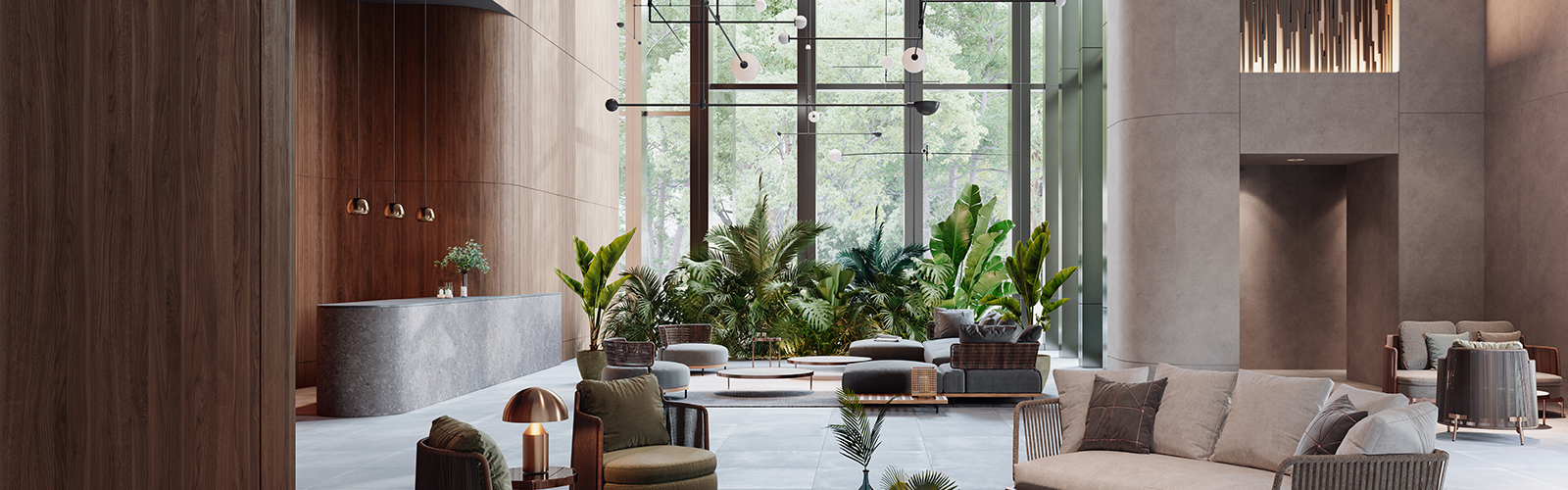

Architectural finishes are increasingly expected to do more than look good. They need to perform, install efficiently, support sustainability goals, and adapt to tight construction programs.
One material that continues to gain traction in commercial and high-end residential projects is 3M™ Di-NOC™ Architectural Finishes. This article outlines where Di-NOC fits, how it’s typically used, and what to consider when specifying it.
What Is Di-NOC?
Di-NOC is a high-performance architectural surface film designed to replicate natural and manufactured materials with remarkable consistency. The range includes finishes inspired by:
- Timber and woodgrains
- Concrete and stone
- Metals and industrial textures
- Textiles, leather and abstract patterns
Rather than replacing substrates, Di-NOC is applied over existing or newly prepared surfaces, making it particularly useful where traditional materials are impractical.
Where Di-NOC Performs Best
Di-NOC is commonly specified in environments where time, access, or cost make traditional materials challenging.
Typical applications include:
- Commercial interiors and office fit-outs
- Retail and hospitality environments
- Lift cars, lobbies and common areas
- Joinery, doors, wall panels and columns
- Refurbishment projects where demolition is not ideal
Its ability to achieve a consistent finish across large areas is especially valuable in multi-site or staged rollouts.
Key Advantages to Consider
From a specification perspective, Di-NOC offers several practical benefits:
- Minimal disruption – often installed over existing finishes
- Predictable outcomes – consistent colour and texture across batches
- Reduced lead times compared to bespoke joinery or stone
- Lower material waste, supporting sustainability objectives
- Fire-rated options suitable for commercial interiors
These advantages make Di-NOC a useful tool in value-engineering without compromising design intent.
Things to Get Right When Specifying Di-NOC
Like any architectural finish, performance is closely tied to correct specification and installation.
Important considerations include:
- Substrate condition and preparation
- Suitability of the chosen finish for the environment
- Edge detailing and termination points
- Installation sequencing within the build program
Di-NOC performs best when treated as a finish system, not a decorative afterthought.
Working With the Full Di-NOC Range
The Di-NOC catalogue is extensive, with hundreds of finishes available across multiple categories. Access to the full Australian range allows designers to explore options that best align with their design language, rather than compromising due to limited availability.
Having support at the selection stage can also help streamline approvals and avoid late-stage substitutions.
Final Thoughts
3M™ Di-NOC™ Architectural Finishes have become a trusted solution for architects and builders seeking flexibility, efficiency, and high-quality outcomes.
When specified thoughtfully and installed correctly, Di-NOC can play a key role in delivering durable, design-led spaces — particularly where traditional materials introduce cost, time, or construction constraints.
1800 Projects is a 3M Gold Partner, supplies the complete Australian Di-NOC range, and has completed accredited Di-NOC installation training.